

Norway's Military Learns a Hard Lesson From Training Ukrainian Troops: Avoid Fighting This Kind of War at All Costs
Norway's armed forces say the most valuable takeaway from their work preparing Ukrainian soldiers for battle is a warning aimed at themselves: a small NATO country cannot afford to

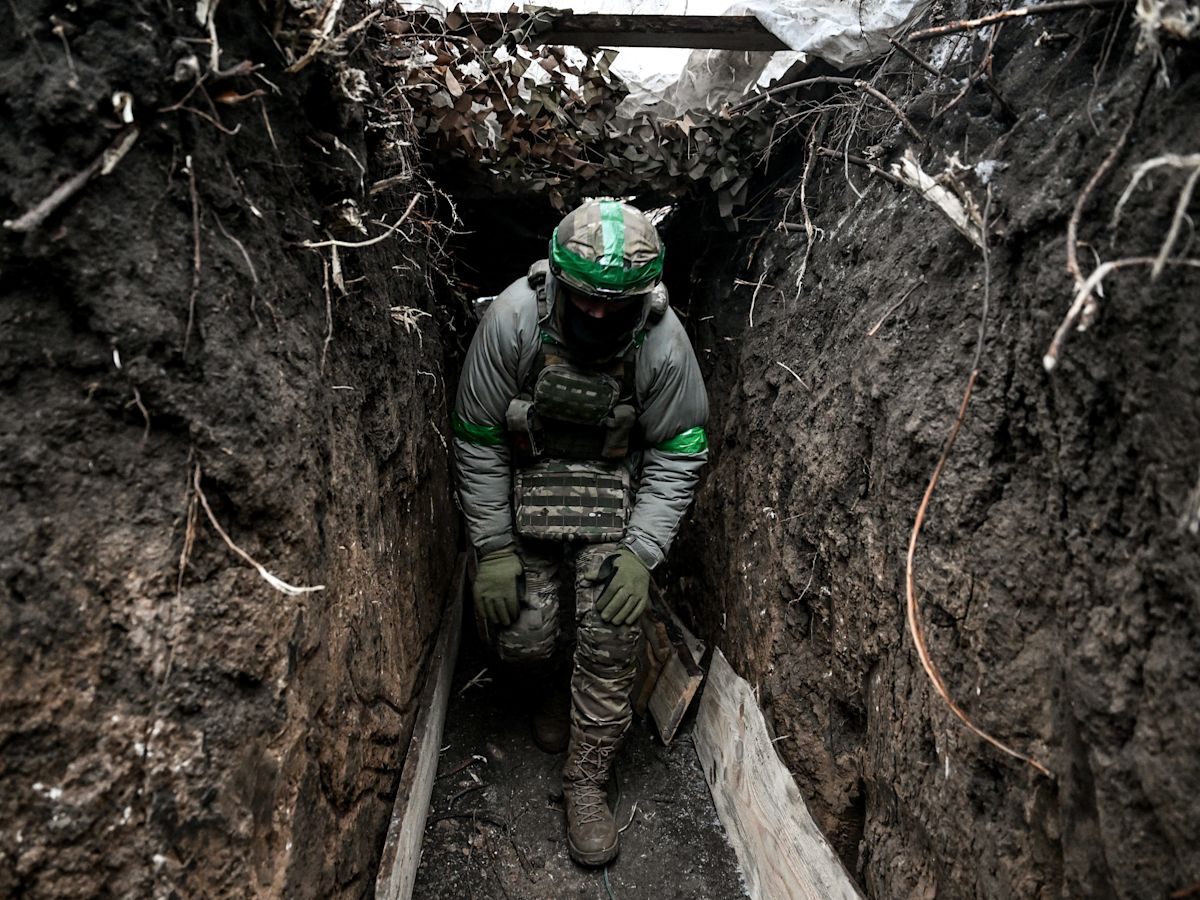
Norway's armed forces say the most valuable takeaway from their work preparing Ukrainian soldiers for battle is a warning aimed at themselves: a small NATO country cannot afford to end up trapped in the kind of grinding, positional conflict currently devastating Ukraine.
The lesson comes from Operation Legio, a multinational, Norway-led initiative that trains Ukrainian troops at Camp Jomsborg, a purpose-built site located in Poland, another member of the alliance. Officers directing the program told Business Insider that stopping a future confrontation from congealing into a static, attritional struggle has become a guiding principle of Norwegian defense planning.
Maj. John, the S3 Operations Officer responsible for synchronizing the entire training operation, said the priority is ensuring Norway never finds itself locked into the sort of immobile warfare playing out on the eastern front. His goal, he explained during an interview at Camp Jomsborg, is for Norwegian forces to stay mobile and adaptable rather than pinned in place.
He pointed to the human cost as the starkest reason why. Russian casualties are believed to run to roughly 35,000 personnel every month, a figure he noted matches widely cited estimates from the conflict. A nation of five million people such as Norway could not absorb losses anywhere near that scale and continue to function, which is why avoiding such a scenario altogether matters more than winning one.
Brigadier Atle Molde, who commands Task Force Legio, framed the same idea more bluntly. He said the crucial insight is to never allow the country to reach the point where it must fight for its existence year after year while suffering enormous casualties. Preparation, he argued, is the only safeguard.
That readiness, Molde stressed, must extend across all of society rather than resting solely on the military. In his assessment, neither Norway nor any other Western nation is genuinely prepared today for such an ordeal.
Getting ready also means filtering the right lessons out of Ukraine's experience. Norwegian trainers said they try to distinguish between tactics worth adopting and methods Ukrainian forces rely on simply because no better option exists under wartime conditions.
Preparation spans an enormous range, Molde added, from nationwide civil resilience down to teaching an individual soldier how to bring down a hostile drone using a shotgun, with countless capabilities in between those extremes.
Norway enjoys the security guarantee that comes with NATO membership, but John said the country still has to solve the problem of staying dynamic on the battlefield. He pointed to air-defense technologies in which Ukrainians have become world leaders, along with counter-drone systems and electronic-warfare tools, as the means of keeping armored formations rolling. Norway remains, he emphasized, a mechanized army.
Ukraine has produced battlefield innovations that allies scrutinize closely, yet many of those advances appeared only once the front lines had already hardened into a prolonged stalemate. Both armies have dug elaborate defensive networks while clouds of surveillance and strike drones watch nearly every movement, making it extremely risky to concentrate tanks or infantry for large operations. The terrain near the front is routinely described by soldiers as a kill zone.
NATO itself has absorbed similar conclusions. A Future Force Study published by the alliance in June concluded that militaries must learn to maneuver even while under intense observation. At the same time, numerous officials caution that heavy losses may prove unavoidable in a major war, meaning Western forces still need the durability to endure an extended, Ukraine-style campaign if deterrence ever fails.
-- END --
What's Your Reaction?
 Like
0
Like
0
 Dislike
0
Dislike
0
 Love
0
Love
0
 Funny
0
Funny
0
 Wow
0
Wow
0
 Sad
0
Sad
0
 Angry
0
Angry
0



Comments (0)