

Merz Declares Germany's Economy Growing Again After Three-Year Slump
German Chancellor Friedrich Merz has announced that Germany is growing once more, bringing to a close a three-year period of recession in Europe's largest economy. The declaration

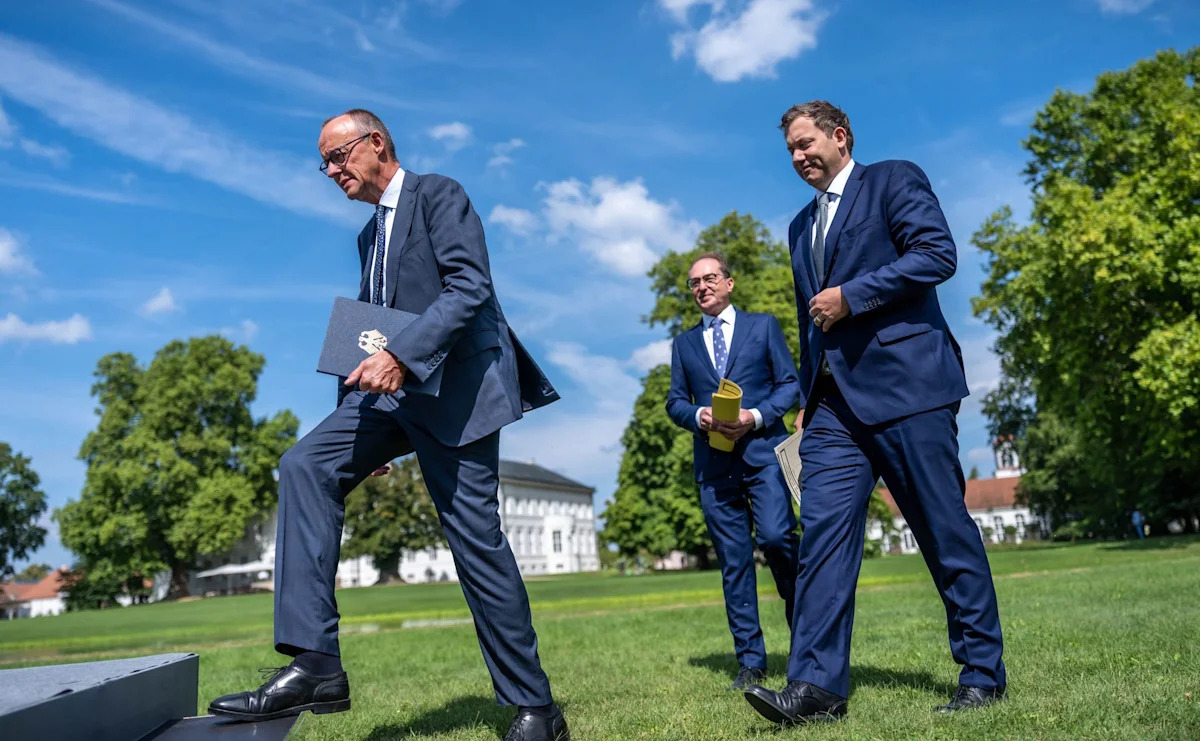
German Chancellor Friedrich Merz has announced that Germany is growing once more, bringing to a close a three-year period of recession in Europe's largest economy. The declaration represents a symbolic and economic turning point for a country that has spent recent years struggling to regain its footing after a prolonged stretch of shrinking output.
Merz's assessment marks a notable shift in tone from Berlin, where officials had spent much of the past several years warning businesses and households to brace for continued hardship. For a nation long regarded as the industrial engine of the European Union, confirmation that growth has returned will be read in Brussels and across the eurozone as welcome news with implications far beyond Germany's borders.
The country's downturn stretched across three consecutive years, an unusually long slump by modern German standards. An economy accustomed to exporting its way to steady gains found itself contracting instead, prompting soul-searching among policymakers and business leaders alike about whether the country's economic model—built on cheap energy, open trade, and manufacturing prowess—was fundamentally broken.
A confluence of pressures drove the decline. Energy prices surged following the loss of Russian gas supplies, raising costs for energy-intensive industries such as chemicals and metals. Demand for German goods weakened abroad, while competition from China intensified in key sectors like automobiles and machinery, eroding the market share German firms once took for granted. Uncertainty surrounding international trade policy further weighed on investment decisions.
The incoming government responded by rethinking Germany's famously strict approach to public borrowing. Rules limiting federal debt were relaxed to accommodate higher defense spending, and a large-scale fund for infrastructure renewal was created, opening the way for investment in roads, bridges, railways, and schools that had been deferred for years. That fiscal pivot is expected to act as a tailwind for the recovery now said to be underway.
Signs of improvement had been accumulating before Merz's announcement. Business sentiment surveys have pointed toward greater optimism among executives, and orders tied to defense and public works have helped offset weakness elsewhere. Consumers, whose confidence sagged during the recession years, are seen as central to sustaining momentum if household spending picks up alongside rising employment prospects.
Still, the chancellor struck a note that balanced celebration with caution. Growth returning does not mean Germany's difficulties are resolved. Structural problems—including cumbersome bureaucracy, high energy costs relative to competitors, and demographic headwinds from an aging workforce—remain unresolved and could cap the pace of expansion in the years ahead.
Economists have similarly urged restraint in interpreting the turn. A recovery emerging from such a deep and extended slowdown often begins unevenly, with some sectors rebounding quickly while others continue to shed capacity. Whether the current upswing broadens into durable, self-sustaining growth is likely to depend on both domestic reform progress and external conditions, including the trajectory of global trade.
For the wider eurozone, however, the significance of Germany's return to growth is hard to overstate. The country accounts for roughly a quarter of the currency bloc's output, and its fortunes ripple through supply chains stretching from Central European component makers to ports across the continent. A German upswing typically lifts demand for goods and services throughout the single market.
The government in Berlin will now be judged on whether it can convert a moment of good news into lasting performance. With infrastructure money beginning to flow, defense budgets expanding, and a chancellor staking credibility on the recovery, Germany enters its next chapter hoping the three-year recession proves to have been an aberration rather than a preview of permanent decline.
--- END ---
What's Your Reaction?
 Like
0
Like
0
 Dislike
0
Dislike
0
 Love
0
Love
0
 Funny
0
Funny
0
 Wow
0
Wow
0
 Sad
0
Sad
0
 Angry
0
Angry
0

Comments (0)