

Armenia Set to Pursue EU Membership Bid, Signaling Break From Moscow's Orbit
Armenian Prime Minister Nikol Pashinyan announced on Monday that his government will begin preparations to seek membership in the European Union, marking one of the most consequent

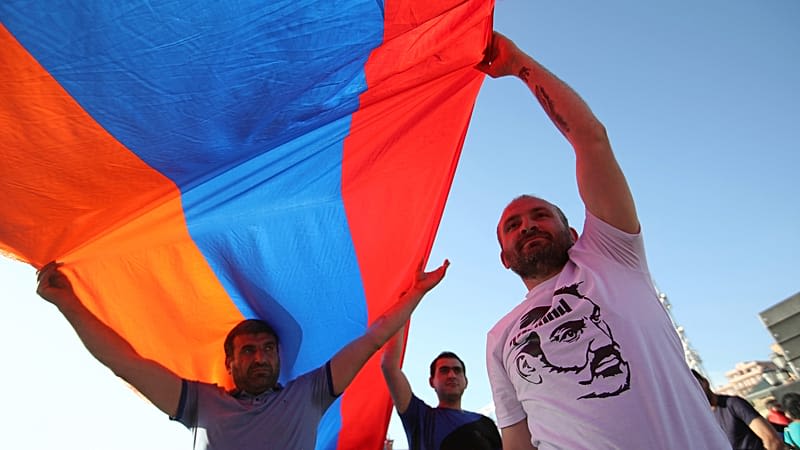
Armenian Prime Minister Nikol Pashinyan announced on Monday that his government will begin preparations to seek membership in the European Union, marking one of the most consequential geopolitical realignments in the South Caucasus since the fall of the Soviet Union.
Addressing parliament, Pashinyan laid out a multi-step path: Yerevan will formally submit its application, await a response from Brussels, negotiate the framework for accession talks, and only then put the question of joining the bloc to voters in a national referendum, which he said should take place "in the near future."
The announcement comes months after members of the Collective Security Treaty Organisation (CSTO), the Russia-led military alliance to which Armenia belongs, pressed Yerevan to choose between staying in the pact and pursuing European integration through a public vote. At the time, Pashinyan dismissed the ultimatum as premature, amid a wave of Russian economic restrictions on Armenia and a direct warning from President Vladimir Putin invoking a "Ukrainian scenario."
On Monday, however, the prime minister struck a markedly different tone. He said he would welcome a decision by the alliance itself to expel Armenia, noting that such a move would at least spare Yerevan the dilemma of choosing whether to withdraw. For now, he added, Armenia will remain in the CSTO until a parting of ways becomes unavoidable.
Pashinyan also offered a pointed reassessment of his country's dependence on Russian security guarantees, arguing that two centuries of bilateral relations rested on Moscow's role as Armenia's protector. The events of 2021 through 2023, spanning Armenia's defeats in its conflicts with Azerbaijan over Karabakh, demonstrated that Russia's capacity to fulfill that role is limited by its own troubles, he said, adding that Armenia had failed to learn the lessons of its own history.
The pivot follows a landmark peace agreement signed with Azerbaijan in August 2025, which has opened the door to economic cooperation between the longtime adversaries with backing from the EU and the United States. In another surprise, Pashinyan called on Moscow on Monday to relinquish its monopoly concession over Armenia's railways, which runs until 2038, so the network can be linked into international corridors, potentially with Kazakh or Emirati investment.
Armenia's economy remains tied to Russian energy and infrastructure, and the Kremlin moved quickly to warn of consequences. Presidential spokesman Dmitry Peskov cautioned that aligning with EU standards could create deep trade frictions that would hurt Armenia first, though he said Yerevan was free to leave the CSTO if it judged membership no longer served its national interests.
What's Your Reaction?
 Like
0
Like
0
 Dislike
0
Dislike
0
 Love
0
Love
0
 Funny
0
Funny
0
 Wow
0
Wow
0
 Sad
0
Sad
0
 Angry
0
Angry
0

Comments (0)